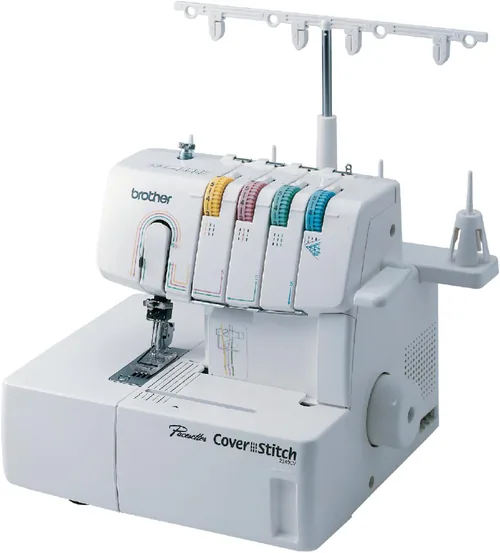
Choose the 2340CV for coverstitch work, rather than as a general replacement for a sewing machine or an edge-trimming overlocker. This distinction is more important than the similar appearance of machines with several thread cones.
Which finish do you need?
Brother’s 2340CV specifications identify narrow and wide coverstitches, tri-cover stitch and chain stitch, with differential feed and adjustable presser-foot pressure. The listed coverstitch widths are 3 mm and 6 mm.
Cover hems
Compare the rows of stitching and the finish on the underside with the garment you want to make. A fabric name alone does not specify the required finish.
Edge finishing
If your main task is overlocking a raw edge, compare a dedicated overlocker such as the 1034D. Do not select the 2340CV from a generic “serger” label.
Pros & Cons Analysis
Benefits and limits of the documented features.
Advantages
- The coverstitch choices give a specific reason to add a second machine when ordinary garment construction is already covered. Choose the width by the intended hem, not by assuming the widest setting is strongest.
Limitations
- A published stitch list does not establish that every stretch fabric will produce a flat, secure hem immediately. Sample preparation and the actual seam still need evaluation.
- A stitch specification cannot establish elastic recovery on your garment, long-term durability or service frequency.
Our Verdict
A specialist purchase for repeated cover hems
The 2340CV deserves consideration when cover hems are a recurring job and you are willing to learn a separate setup. For occasional hems, compare the cost, space and learning time with your existing method before adding a dedicated machine.