Sewing Machine Guide

  • Home
  • Reviews
  • Best
    • All Best Picks
    • Computerized
    • Embroidery
    • Mechanical
    • Quilting
  • Guides
    • All Sewing Guides
    • Computerized
    • Embroidery
    • Mechanical
  • Comparisons
    • All Comparisons
    • Computerized
    • Embroidery
    • Mechanical
    • Straight-Stitch
  • Favorites

Janome HD1000 vs HD3000: Which Mechanical Workflow Wins?

The Janome HD3000 is the better all-around mechanical machine when top-loading bobbin access, adjustable presser-foot pressure and one-step buttonholes matter. The HD1000 suits buyers who prefer a simpler front-loading layout and can accept fewer stitches.

COMPARED PRODUCTS

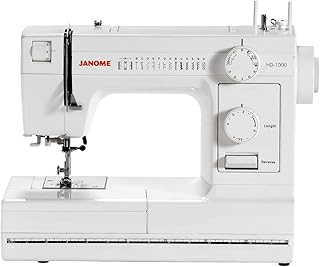
Janome HD1000 Review: All-Aluminum Simplicity With an Old-School Bobbin

Better for stripped-back mechanics

Janome HD1000 Review: All-Aluminum Simplicity With an Old-School Bobbin

Check price at Amazon Jump to details
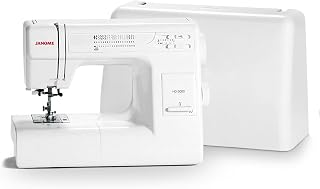
Janome HD3000 Review: A Better Mechanical Workflow Than the HD1000

Better all-around mechanical workflow

Janome HD3000 Review: A Better Mechanical Workflow Than the HD1000

Check price at Amazon Jump to details

Janome HD1000 vs HD3000 is a choice between two mechanical machines with similar maximum speed but different daily workflows. The HD3000 is the stronger default for varied garment and home projects because its top-loading bobbin, adjustable presser-foot pressure and one-step buttonhole reduce routine friction. The HD1000 is the more austere option for a buyer who values direct controls and accepts a front-loading bobbin and four-step buttonhole.

Choose HD1000Old-school simplicity and a narrower 14-stitch toolset
Choose HD3000Easier bobbin access, pressure adjustment and one-step buttonholes
Choose neitherElectronic speed limiting, needle stop or industrial production

The machines share speed, not the same ownership routine

Both are foot-controlled mechanical Janomes with an 860-stitch-per-minute published ceiling, aluminum internal construction and hard covers. Neither provides a speed slider, start/stop sewing or programmable needle stop. This comparison uses exact-model documentation and 100 supplied owner texts for each product; the site did not perform physical tests.

Calling one “more powerful” would go beyond the evidence. The useful differences are visible in bobbin access, pressure control, stitch selection, buttonhole process and workspace. Those features influence setup and fabric handling without proving that either machine is an industrial tool.

14HD1000 stitchesA compact utility and stretch selection.
18HD3000 stitchesA slightly broader mechanical library.
4-stepHD1000 buttonholeRequires more operator sequencing.
1-stepHD3000 buttonholeA repeatable convenience for garments.

Bobbin access is the daily difference you will notice first

The HD1000 uses a front-loading vertical oscillating system. Some sewists prefer its familiar removable case, but changing or inspecting the bobbin generally requires more access work around the free arm. The HD3000 uses a top-loading rotary system, making thread supply and seating easier to see from above.

Does top loading automatically produce better stitches?

No. Correct threading, a sound needle, suitable thread and balanced tension still determine the result. Top loading changes access and visibility; it is not proof of superior stitch formation.

The HD3000 offers a more adjustable fabric path

Adjustable presser-foot pressure is documented on the HD3000. That gives the operator another control when moving between lightweight, ordinary and thicker assemblies. The HD1000 keeps a more fixed routine. This distinction matters to a mixed-fabric sewist, but it should not be translated into unsupported claims about leather, upholstery or unlimited denim layers.

HD1000 advantage

Fewer decisions at the panel

Fourteen stitches and direct dials suit a user who wants a narrow mechanical brief.

HD3000 advantage

More control over routine setup

Top access, pressure adjustment and a one-step buttonhole reduce repeated handling.

Shared limit

No electronic speed ceiling

Both rely on pedal control, which beginners should test at very low speed.

Owner feedback makes arrival condition more important than the badge

HD1000 owners often describe a planted, quiet feel and useful domestic range. The same 100-text file includes setup, tension, feed and misadjustment complaints. HD3000 reports cover broad fabric use and straightforward mechanical operation, but also buttonhole limits, modest workspace or lighting, factory issues and longer-term failures. Neither sample supports a numerical reliability ranking.

The practical response is identical in spirit but different in detail: verify low-speed pedal response on both; inspect front-bobbin insertion and removal on the HD1000; test top-bobbin seating, pressure adjustment and a complete one-step buttonhole on the HD3000.

Priority Better fit Why
Simplest stitch menu HD1000 Fourteen stitches keep selection narrow.
Visible bobbin access HD3000 The rotary bobbin loads from above.
Changing fabric types HD3000 Adjustable foot pressure adds a documented control.
Repeat garment buttonholes HD3000 Its one-step process reduces manual sequencing.
Electronic slow-speed control Neither Both depend on the foot pedal.

The better value depends on repeated motions

Do not justify the HD3000 merely by counting four additional stitches. Its value is cumulative: every bobbin inspection happens from above, every fabric-pressure change has a documented adjustment, and every automatic-size buttonhole avoids the HD1000’s four-stage sequence. A sewist who performs those actions weekly may benefit more than someone who mainly makes straight seams.

The HD1000 can still be the efficient purchase when its front-loading system is familiar and the operator seldom changes fabrics or makes buttonholes. Compare exact same-day packages because bonus feet and retailer listings vary. A hard cover is documented for both, while an extension table is not part of the normalized standard package. Do not assign upgrade value to accessories that are pictured but not confirmed.

Also consider service familiarity. A local technician’s experience, parts route and return policy can outweigh a small feature difference, but those facts must be checked locally rather than inferred from the Janome badge. Neither machine’s mechanical architecture eliminates the need for maintenance or professional correction when timing or feed is genuinely wrong.

For a first machine, the HD3000’s visible bobbin and pressure control can shorten diagnosis. For an experienced owner already comfortable with front-loading cases, the HD1000 may create no meaningful learning penalty. Ease is therefore a relationship between machine and operator, not a universal specification.

Use the same logic for portability. Both hard covers help protect storage, but the real routine includes lifting, power-cord storage, table stability and enough space behind the fabric. If the machine stays permanently available, repeated control conveniences deserve more weight. If it comes out for occasional repairs, fast unpacking and familiar threading can outweigh a slightly broader feature set.

A five-part mechanical-machine acceptance test

  1. Listen at slow and moderate speed. The pedal should start predictably without abrupt surging or unusual mechanical noise.
  2. Sew three fabric weights. Use known woven samples and appropriate needles rather than a dramatic stack.
  3. Check the bobbin path. Remove, reload and reseat the exact system until the route is unambiguous.
  4. Make the advertised buttonhole. Complete the full process more than once on stabilized fabric.
  5. Inspect the delivered package. Confirm feet, hard cover, manual, voltage and any retailer-specific accessories.

Read the Janome HD1000 review for its simpler mechanical case, or the Janome HD3000 review for its broader control set. You can also browse more mechanical sewing machines.

Better for stripped-back mechanics

Janome HD1000 Review: All-Aluminum Simplicity With an Old-School Bobbin

Janome HD1000 Review: All-Aluminum Simplicity With an Old-School Bobbin

Get it now:

Check latest price

What to know

  • Pair role: The narrower, more traditional mechanical workflow.
  • Shared speed: The same 860-spm published ceiling as the HD3000.
  • Daily tradeoff: Front bobbin access and a four-step buttonhole require more handling.
  • Owner checkpoint: Verify threading, feed, tension and smooth low-speed starts.

Best if

  • You prefer 14 direct mechanical stitch choices
  • A front-loading removable case is familiar
  • You can sequence a four-step buttonhole

Skip if

  • You want top-loading bobbin visibility
  • Adjustable presser-foot pressure matters
  • You make frequent repeat buttonholes

The simpler machine asks more from the operator

In this pair, the HD1000 is the deliberate minimalist. Fourteen stitches, direct dials and an 860-stitch-per-minute ceiling cover repairs, garments and ordinary home projects without an electronic interface. Its aluminum construction and hard cover support the traditional workhorse appeal, but that label should not be confused with industrial feeding or unlimited material thickness.

The front-loading vertical bobbin and four-step buttonhole make routine handling more involved than on the HD3000. The supplied 100-owner file includes praise for quiet, planted sewing alongside tension, feed, setup and misadjustment complaints. Those themes make careful threading and low-speed testing more useful than assuming simplicity guarantees immunity from problems.

Choose the HD1000 when a narrow stitch menu and familiar removable bobbin case are genuine preferences. If you change fabric types often, want top access or make repeated garment buttonholes, the HD3000’s controls solve practical tasks that the HD1000 leaves to operator technique.

Machine classDomestic mechanical sewing machine
Built-in stitches / applications14 stitches
Maximum sewing speed860 stitches per minute
Maximum stitch width5 mm
Bobbin / looper systemFront-loading vertical oscillating hook
Presser-foot pressureNot published
Workspace right of needle6.4 inches
Buttonholes / eyelets1 four-step buttonhole
Extension tableOptional
WarrantyJanome limited warranty; terms vary by component and seller—confirm current US coverage
Better all-around mechanical workflow

Janome HD3000 Review: A Better Mechanical Workflow Than the HD1000

Janome HD3000 Review: A Better Mechanical Workflow Than the HD1000

Get it now:

Check latest price

What to know

  • Pair role: The more adjustable general-purpose mechanical option.
  • Access advantage: A top-loading rotary bobbin is visible from above.
  • Fabric control: Adjustable foot pressure adds a documented variable.
  • Owner checkpoint: Repeat buttonholes and inspect feed, lighting and arrival condition.

Best if

  • You value top bobbin access and pressure adjustment
  • One-step buttonholes belong in regular garment work
  • You will test several intended fabrics during the return period

Skip if

  • You want the narrowest possible control set
  • A four-step process is acceptable and rarely used
  • You require electronic speed limiting or needle stop

The useful upgrade is routine control

The HD3000 wins this comparison for most mixed domestic sewing because its advantages appear during ordinary setup. A top-loading rotary bobbin is easier to see, adjustable presser-foot pressure adds a response when fabric changes, and a one-step buttonhole reduces repeated manual sequencing. Eighteen stitches and a 6.5-mm maximum width broaden the menu without abandoning mechanical operation.

Its 860-stitch-per-minute ceiling is not faster than the HD1000, and the domestic workspace remains modest. In 100 supplied owner texts, broad fabric use and straightforward operation coexist with buttonhole, lighting, workspace, factory and longer-term failure complaints. The sample supplies checkpoints, not a failure probability.

Choose the HD3000 when bobbin access, pressure adjustment and garment workflow justify the step up. If you prefer a front-loading case and seldom use the extra controls, the HD1000 can be enough. Neither model is the answer when a speed limiter or programmable needle stop is non-negotiable.

Machine classDomestic mechanical sewing machine
Built-in stitches / applications18 stitches
Maximum sewing speed860 stitches per minute
Maximum stitch width6.5 mm
Bobbin / looper systemTop-loading full rotary hook
Presser-foot pressureAdjustable
Workspace right of needle6.5 inches
Buttonholes / eyelets1 one-step buttonhole
Extension tableOptional
WarrantyJanome limited warranty; terms vary by component and seller—confirm current US coverage

Product Comparison

Feature Janome HD1000 Review: All-Aluminum Simplicity With an Old-School Bobbin Janome HD3000 Review: A Better Mechanical Workflow Than the HD1000
Product Image
Janome HD1000 Review: All-Aluminum Simplicity With an Old-School Bobbin
Janome HD3000 Review: A Better Mechanical Workflow Than the HD1000
Rating
4.0 / 5
4.3 / 5
Category Mechanical Sewing Machines Mechanical Sewing Machines
Stitch Quality & Control
4.2 / 5.0
4.4 / 5.0
Ease of Setup & Use
3.8 / 5.0
4.3 / 5.0
Fabric & Project Fit
4.0 / 5.0
4.4 / 5.0
Build, Accessories & Value
4.1 / 5.0
4.2 / 5.0
Brand Janome Janome
Exact model HD-1000 HD-3000
ASIN B001I1IZ2K B00916Y4YM
Machine class Domestic mechanical sewing machine Domestic mechanical sewing machine
Control type Mechanical dials, levers and foot control Mechanical dials and foot control
Primary functions Garments, repairs, home décor and basic quilting Garments, alterations, home décor and moderate quilting
Built-in stitches / applications 14 stitches 18 stitches
Maximum sewing speed 860 stitches per minute 860 stitches per minute
Speed control Foot control Foot control
Maximum stitch length 4 mm 4 mm
Maximum stitch width 5 mm 6.5 mm
Needle positions 15 15
Needle stop up/down No No
Needle threader Built in Built in
Thread cutter Manual Manual
Bobbin / looper system Front-loading vertical oscillating hook Top-loading full rotary hook
Feed system 3-piece feed dog 5-piece feed dog
Feed-dog control Drop feed Drop feed
Presser-foot lift Extra-high position Extra-high position
Free arm Yes Yes
Workspace right of needle 6.4 inches 6.5 inches
Lighting Built-in sewing light Built-in sewing light
Display No No; top-lid stitch guide
Included presser feet Zigzag, zipper, hemmer, ultra-glide/even-feed bundle components; verify exact listing Zigzag, zipper, automatic buttonhole, blind-hem, overedge and rolled-hem feet among standard set
Dimensions 15.6 × 6.3 × 12.4 inches 16 × 7.2 × 11.3 inches
Weight 16.8 lb 18.7 lb
Power / market voltage US-market model; verify delivered unit US-market model; verify delivered unit
Frame construction All-aluminum interior frame and body Heavy-duty aluminum internal frame
Warranty Janome limited warranty; terms vary by component and seller—confirm current US coverage Janome limited warranty; terms vary by component and seller—confirm current US coverage
Utility stitches Included Included
Stretch stitches Included Included
Decorative stitches Limited selection Included
Buttonholes / eyelets 1 four-step buttonhole 1 one-step buttonhole
Reverse sewing Lever Lever/button
Start / stop button No No
Foot control Included Included
Twin-needle support Follow manual Follow manual
Extension table Optional Optional
Custom stitch creation No No
Buy Now View Deal View Deal

HD1000 or HD3000: Choose the Workflow, Not the Label

Choose HD1000 for narrower mechanical simplicity

Its 14-stitch layout and direct controls suit a buyer who accepts front-loading bobbin access and a four-step buttonhole.

Test pedal response carefully because no speed limiter is provided.

Choose HD3000 for easier daily adjustment

Top-loading bobbin access, adjustable foot pressure, 18 stitches and a one-step buttonhole make it the better general-purpose mechanical choice.

Those conveniences do not make it an industrial machine.

Choose neither for electronic control

Look beyond this pair when a speed slider, start/stop button, programmable needle stop or computerized stitch handling is essential.

Inspect any delivered machine before the return deadline.

Frequently Asked Questions

What is the main difference between Janome HD1000 and HD3000?

The HD3000 adds a top-loading rotary bobbin, adjustable presser-foot pressure, 18 stitches and a one-step buttonhole. The HD1000 has 14 stitches, a front-loading vertical bobbin and a four-step buttonhole.

Are the HD1000 and HD3000 the same speed?

Both normalized records publish an 860-stitch-per-minute maximum. That ceiling does not prove equal feeding, stitch quality or low-speed pedal behavior.

Which Janome is better for a beginner?

The HD3000 usually offers the easier daily workflow because the bobbin is visible from above and the buttonhole is one step. A beginner who prefers a narrower control set may still favor the HD1000.

Can either model sew leather or upholstery?

The supplied evidence does not justify treating either domestic machine as an industrial leather or upholstery tool. Match needle, thread and material to current documentation and test ordinary intended seams conservatively.

Does the HD3000 have speed control?

It uses a foot controller but does not document an electronic speed-limiting slider. Buyers who need a fixed low-speed ceiling should consider a computerized alternative.

Is the HD3000 worth upgrading from the HD1000?

It is worth the upgrade when top bobbin access, adjustable foot pressure and repeat one-step buttonholes improve your normal work. If those features are unimportant, the HD1000 keeps the mechanical brief simpler.

×

About Sewing Machine Guide

Independent sewing machine reviews and practical buying guidance.

Your trusted source for honest, in-depth product reviews and comparisons.

Quick Links

  • Home
  • Reviews
  • Best Articles
  • Comparisons
  • Guides
  • About
  • Contact
  • Privacy Policy

Categories

  • Computerized Sewing Machines
  • Embroidery Machines
  • Handheld Sewing Machines
  • Industrial
  • Mechanical Sewing Machines
  • Mini Sewing Machines

© 2026 Sewing Machine Guide. All Rights Reserved.

As an Amazon Associate I earn from qualifying purchases. We may also earn from other retailer links. Affiliate disclosure