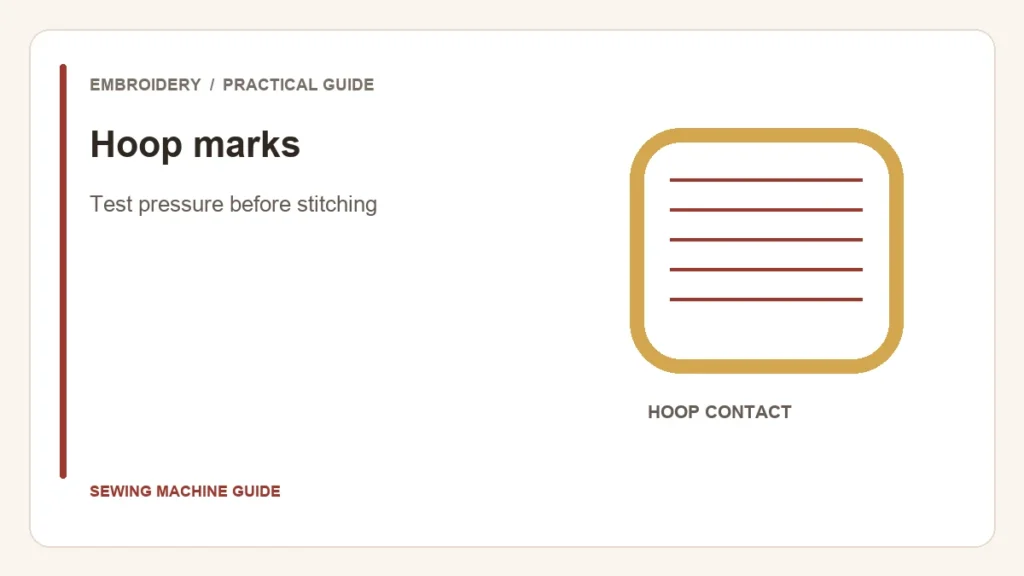
Hoop burn is a pressure impression left by the frame, not necessarily heat damage. Start by checking whether the fabric tolerates hooping and any proposed cleanup. A method that refreshes one washable knit can permanently mark a different surface.
The first test does not need a design
- Choose an inconspicuous spare piece of the same material, or a sample garment when the finished item is valuable.
- Fit the approved hoop with the intended backing, following the machine and hoop instructions. Keep fabric smooth without stretching it to fill the frame.
- Remove it and inspect the contact area in normal and angled light.
- If it marks, test only a care method allowed for that material. Evaluate the result when completely dry.
Embroidery Library’s hoop-burn explanation identifies compressed fibers as the source of the impression and discusses why pile fabrics and easily marked surfaces need particular care. Its washable-fabric suggestions are not permission to steam, soak or treat every garment.
Mark disappears with permitted care
Repeat the complete embroidery sample before trusting the finished garment.
Mark remains or the surface changes
Change the hooping approach or project plan before stitching the item.
Floating is a different setup, not a free fix
Hooping only stabilizer and attaching fabric above it avoids the same direct clamping arrangement, but it introduces a different question: how the fabric is held against movement. Do not assume that eliminating hoop contact automatically preserves alignment. Establish a supported method for the exact fabric, design and machine.
Likewise, a magnetic hoop needs confirmed machine compatibility and its own handling instructions. A claim of gentler pressure does not establish that every material will remain unmarked. Test the complete combination rather than buying a different frame on a universal “no marks” promise.
Keep the embroidery stable without overstretching
- Use the frame size and attachment approved for the machine.
- Set up on a stable surface so the fabric is positioned deliberately.
- Keep bulky excess material clear of the carriage path.
- Check whether the fabric returns to a different shape after release. A smooth appearance while stretched in the hoop can be misleading.
Hoop size and embroidery area are separate compatibility checks. A frame that appears to grip the fabric well may still be wrong for the machine or design field.
Choose a method before risking the final item
Keep the test piece and note the hoop, backing and permitted finishing process. If the only apparent solution depends on an untested chemical, unsupported frame or care method the fabric forbids, pause the project and obtain specific guidance. The successful outcome is an unmarked, stable finished item—not simply completing the stitches.