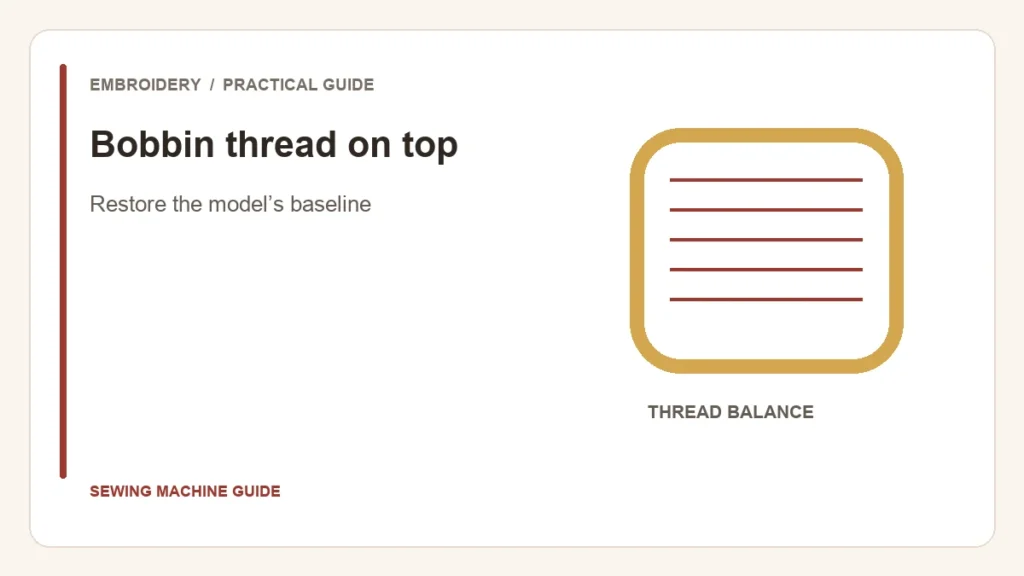
Visible bobbin thread on the face of embroidery can be a tension-balance symptom, but it is not enough to diagnose a bobbin screw. First restore the exact bobbin, thread and threading setup the machine requires.
Start with the model, because thread weights differ
Brother’s guidance covering models including the SE700 specifies 60-weight embroidery bobbin thread, while its PE800/PE900 guidance specifies 90-weight. That difference is why a generic “Brother embroidery” recipe is not enough. Match the article’s model coverage to the label on your machine.
| Before adjusting | What to verify |
|---|---|
| Bobbin | Approved type, even winding and correct seating. |
| Thread | The specified embroidery bobbin thread and suitable upper thread. |
| Thread path | Every guide and the bobbin tension channel, by the exact diagram. |
| Accessible lint | Only the cleaning and access permitted by the manual. |
| Needle and stabilizer | Compatible with this fabric and embroidery setup. |
Use a controlled sample to separate the causes
Use a small design and spare material representative of the project. Photograph the top and reverse before changing anything. If the symptom began after a bobbin change, begin with that change; if it began with a different fabric, examine its support and needle selection as well.
- Restore the documented embroidery baseline, including the approved thread and bobbin.
- Stitch a sample and inspect both sides. Do not judge only the screen preview.
- If setup is correct and the manual identifies this appearance as excessive upper tension, use its permitted upper-tension adjustment.
- Change one setting at a time and keep the labeled samples. Return to the baseline if the result worsens.
Distinguish a new symptom
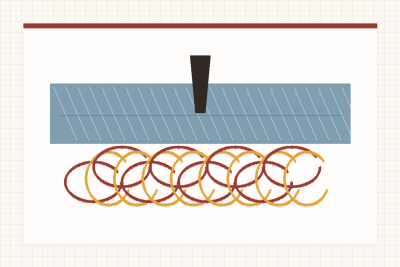
Loose loops on top, a nest under the work and white bobbin thread pulled onto a colored design are not identical observations. If the problem is tangling rather than isolated bobbin exposure, the thread-bunching guide helps document the location and timing. Do not apply multiple fixes for different symptoms simultaneously.
What to send support
Provide the model, bobbin part or class, both thread labels, design source, stabilizer, and photos of the two sides. Include the last successful setup and changes made since. Repeated failure after the documented checks warrants diagnosis; a strong-looking stitch on one short section does not settle an intermittent problem.