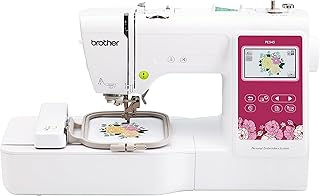
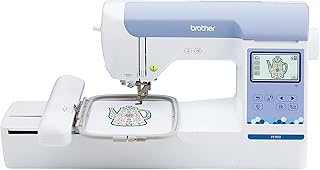
Brother PE545 vs PE900 is a native-field decision before it is a price decision. The PE545 makes sense for small monograms, patches, labels and compact motifs that fit 4×4. The PE900 is the safer long-term purchase when names, borders or medium designs need a continuous 5×7 field. Both are embroidery-only machines, so neither can replace ordinary garment sewing.
Why these two dedicated machines belong together
Both records describe single-needle Brother embroidery machines for the U.S. market, with color touchscreens, USB and wireless transfer routes. The comparison uses normalized exact-model specifications plus 77 supplied PE545 owner texts and 100 PE900 owner texts. We did not physically test either machine, and the review samples identify questions rather than defensible failure rates.
The shared foundation matters: both require stabilizer, correct hooping, suitable thread and manual color changes. Neither turns ordinary artwork into stitches by itself; compatible embroidery data still must be prepared correctly. The real fork is how much native field and workflow headroom the buyer needs.
The hoop boundary changes which designs remain continuous
The PE545 stops at 4 × 4 inches, about 100 × 100 mm. The PE900 expands to 5 × 7 inches, about 130 × 180 mm. That changes more than nominal area. The rectangular PE900 field keeps many longer names, borders and medium motifs in one registration, while the PE545 may require a split file and precise repositioning.
Can a repositionable hoop make the PE545 a 5×7 machine?
No. It may help place separately prepared sections, but it does not enlarge the native 4×4 sewing field. Continuous 5×7 work requires a machine documented for that field.
The PE900 buys workflow headroom, not automatic expertise
The PE545 includes 135 designs and ten fonts. The PE900 raises those counts to 193 designs and thirteen fonts, adds color sorting and documents automatic jump-stitch trimming. Those conveniences can reduce repetitive screen and trimming work, yet they do not correct poor digitizing, loose hooping, unsuitable stabilizer or an incorrectly seated bobbin.
A contained learning surface
The smaller field and 400-spm ceiling suit a buyer deliberately learning on compact work.
Fewer forced layout splits
Native 5×7 geometry is the strongest reason to pay more, especially for longer lettering.
Thread management still decides results
Neither model removes the need to test tension, bobbin seating, needles and transfer.
Owner reports point to different acceptance tests
PE545 owners often describe quick, enjoyable first projects and accessible beginner use. Negative accounts concentrate on the 4×4 ceiling, software or wireless friction, hooping, needle problems and occasional defective arrivals. For this machine, the acceptance test should prove that the compact workflow is genuinely comfortable rather than merely inexpensive.
PE900 owners repeatedly value the larger working space and finished designs. The supplied file also contains threading, bobbin-tension and needle-threader complaints, plus damaged or malfunctioning arrivals. The larger model reduces a geometry constraint, but it does not eliminate setup risk. Sample-size differences should not be converted into a reliability contest.
| Your actual job | Better fit | Reason |
|---|---|---|
| Pocket motifs, patches and short monograms | PE545 | 4×4 covers the work without paying for unused field. |
| Longer names and medium rectangular designs | PE900 | Native 5×7 avoids many split registrations. |
| Frequent larger stitch counts | PE900 | The 650-spm ceiling and workflow aids reduce waiting and cleanup. |
| Garment construction plus embroidery | Neither | Both machines are embroidery-only. |
Let project replacement cost set the price ceiling
A volatile marketplace price cannot decide this comparison permanently. Instead, list the designs that fit only 5×7 and estimate what happens if a 4×4 machine forces repeated splitting or a replacement within the first year. When the PE900 prevents that predictable second purchase, its higher price can be rational. When every named project remains compact, the same premium buys unused geometry.
Normalize the exact bundle before comparing. Hoops, software promotions, thread kits and retailer bonuses can change without altering the machine. Value only the items you would otherwise purchase, and verify whether a returned or refurbished unit is being compared with a new one. The durable PE900 case is native field size; the durable PE545 case is a deliberately narrower brief.
Storage and blank handling provide one more check. The PE900 hoop needs more clear travel and larger stabilizer pieces, while the PE545 can keep supplies and projects compact. If the machine must be unpacked for every session, compare the full setup ritual rather than the body alone. Capacity that makes the machine harder to use can become capacity that never reaches a finished project.
Use the return period to test the whole design route
- Inventory the exact package. Confirm the hoop, embroidery foot, bobbin accessories, power equipment and visible shipping condition.
- Run one known built-in design. Use fresh supplies so a poor first result has fewer possible causes.
- Transfer one compatible custom file. Test the USB or wireless route you actually plan to use.
- Repeat lettering at the edge of your normal size. This exposes whether 4×4 feels workable or immediately restrictive.
- Inspect front and back. Look for looping, exposed bobbin thread, registration movement and thread breaks before the return window closes.
The Brother PE545 review examines the compact starting workflow in detail, while the Brother PE900 review focuses on the practical value of 5×7 space. You can also browse more embroidery machines.