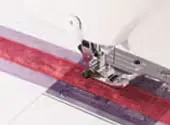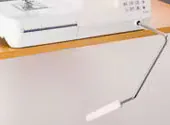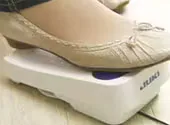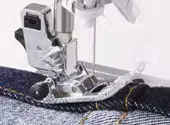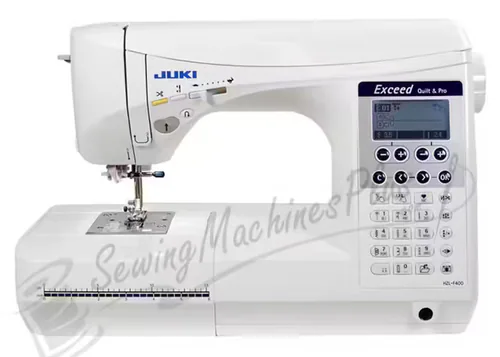
The Juki HZL-F400 is most compelling when repeated stops, trimming and fabric handling slow down ordinary sewing. Its knee lifter, thread-cutting controls and adjustable presser-foot pressure offer a different benefit from simply accumulating stitches. Owner experiences also show why those conveniences should not be confused with a guarantee of trouble-free free-motion quilting.
A slipcover maker explains the convenience
Nan’s account on the F400 merchant review page describes about four months of use making slipcovers. She values pedal-operated thread cutting, the needle threader, bobbin handling and knee lifter. These are separate stages of a working routine: finishing a seam, preparing the next thread and repositioning fabric without reaching for the foot lever.
She also reports sewing layers of canvas and denim successfully. That is a specific project experience, not a verified layer limit for all weights, folds or seam intersections. Nina Minnelli’s costume-making account likewise stresses getting the adjustment right when handling varied materials.
Piecing praise does not settle the free-motion question
Reported benefits
Melissa Jones describes easier piecing and quilting and likes the stitches. Jessie Powell appreciates the feeding behavior. These reports support considering the machine for fabric handling and piecing, without proving that it eliminates shifting or skipped stitches in every setup.
A material counterexample
Susan McKay reports inconsistent tension during free-motion quilting, bobbin thread coming to the surface during backstitching, and bobbins winding loosely or only partly. Her account does not establish the cause or a later service outcome. It does rule out promising uniformly stable tension or effortless bobbin winding.
The listing also contains comments explicitly naming the F600, which are not evidence for F400 equipment or results. Repeated wording under different reviewer names is not independent agreement. Broad F-series praise is less specific than the project accounts above.
What belongs to the F400 package
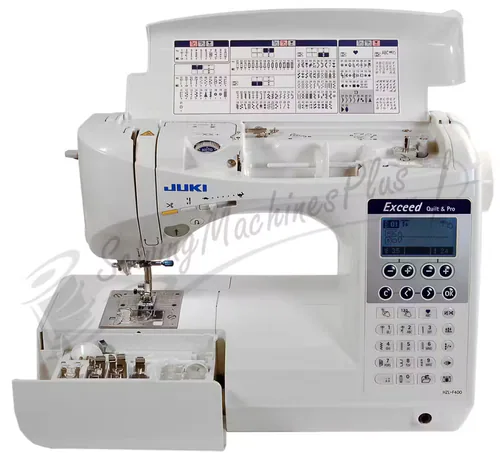
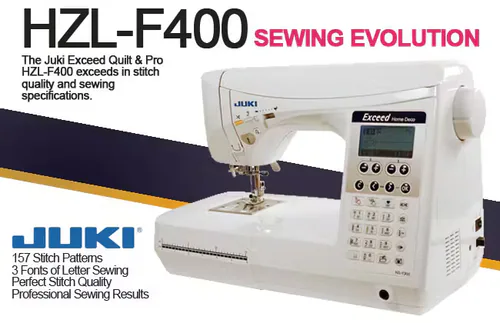
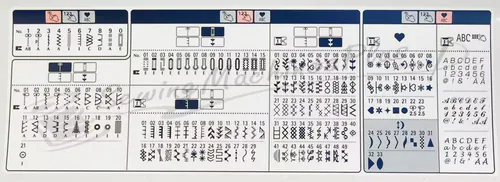
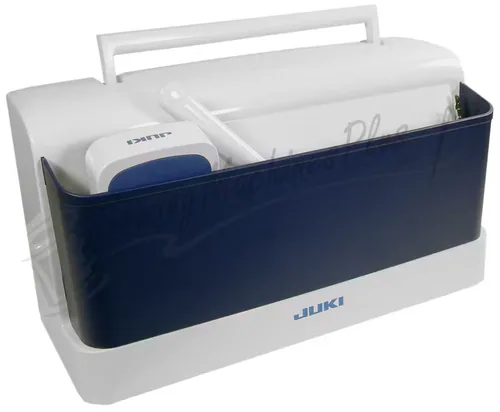
The Juki F-series brochure distinguishes the models: F400 has 157 sewing patterns and three fonts, one LED light and a standard knee lifter. The wide extension table is optional; the F600 illustration should not be taken as the F400’s standard package.
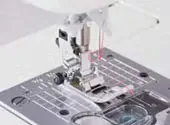
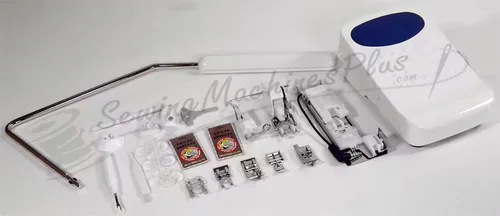
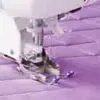
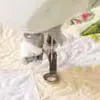
- Walking foot: a separate included attachment in the brochure, not a permanently built-in upper-feed mechanism.
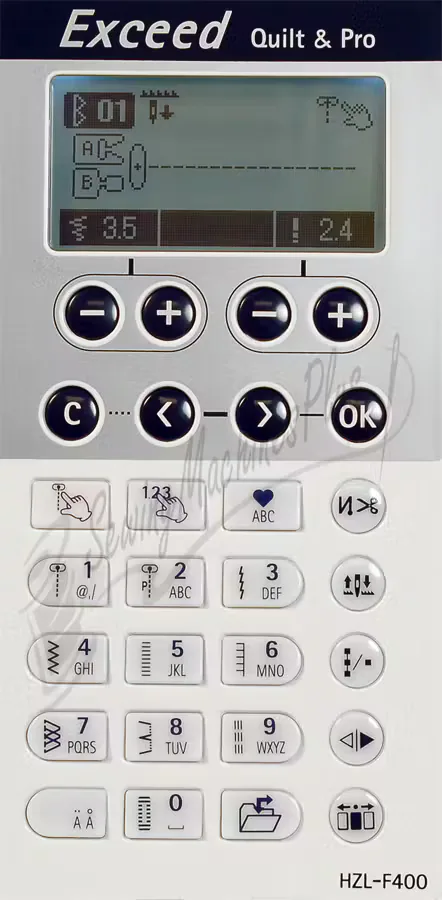
- Thread cutting: available through the machine button or heel action on the supplied controller.
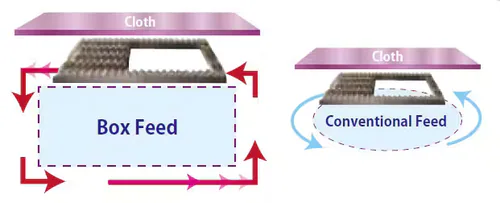
- Fabric adjustment: presser-foot pressure is adjustable. Box feed describes the feed-dog motion; it does not promise perfect seams on every fabric.
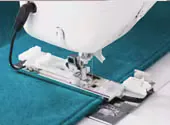
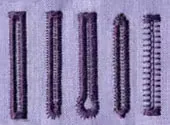
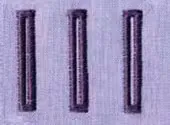
- Buttonholes: 16 types with three cutting-width settings. This is adjustment capability, not a guarantee of flawless holes regardless of material.
Size, stitch limits and accessories
The brochure lists 445 × 290 × 210mm and 9.8kg (21.6lb). The retailer specifies up to 900 stitches per minute, 7mm stitch width and 5mm length. Its work-surface dimensions should not be mistaken for the clear underarm opening.
Juki identifies walking and quilting feet as standard F400 accessories. Confirm the exact retailer bundle if a particular foot or wide table is decisive; family photos and F600 customer comments are not packing lists. Lettering and decorative stitches are not computerized hoop embroidery.
Pros & Cons Analysis
Where the evidence is useful
- Less reaching between seams: Nan’s actual use of the knee lifter and pedal trimming supports their workflow value, rather than treating automation as a feature-count contest.
- Convenient thread preparation: Nan separately praises the threader and bobbin system. These can make repeated setup easier, with Susan’s winding experience providing an important qualification.
- Piecing and fabric handling: Melissa’s piecing report and Jessie’s feeding impression support a shortlist for quilting preparation; they do not establish free-motion consistency.
- Varied project use: Nan’s slipcovers and Nina’s costumes provide concrete contexts beyond generic praise, while their materials and adjustments remain specific to those users.
Reasons to look more closely
- Free-motion and reverse-stitch tension: Susan’s reported inconsistency matters if quilting is the main purpose. No confirmed diagnosis permits dismissing it as operator error.
- Bobbin winding was not trouble-free for everyone: her partly filled or loose bobbins qualify the convenience claim separately from stitch tension.
- Table and family-package confusion: the wide table is optional on F400. A separate walking foot is not integrated dual feed, and F600 reviews cannot establish what arrives with F400.
Our Verdict
Strongest for sewing routines with frequent stops
The F400 deserves consideration when trimming, lifting the foot and changing thread repeatedly interrupt garments, piecing or home projects. The owner accounts give those controls a practical purpose.
For a buyer primarily seeking free-motion quilting consistency, Susan’s experience is a meaningful reservation. Choose with access to model-specific support rather than assuming the industrial-brand heritage guarantees domestic-machine performance. The available accounts do not establish a failure rate or a long-term reliability winner.
Product illustrations