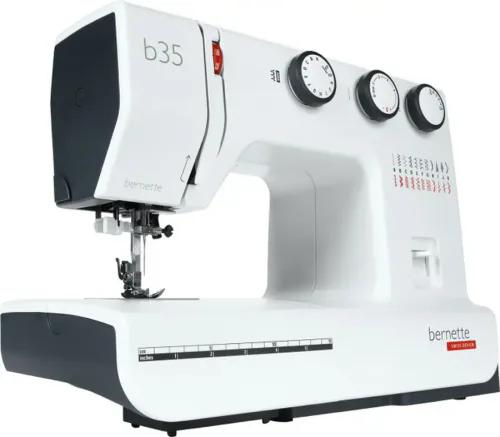
The B35 combines mechanical stitch adjustment with a one-step buttonhole. That is its useful buying distinction: you can prefer visible manual settings without accepting a multi-step buttonhole routine.
Three dials, separate decisions
Bernette’s B35 documentation describes separate pattern, width and length controls, 23 stitches, seven snap-on feet and a manual thread cutter. The manufacturer identifies 6.7 inches of space to the right of the needle.
Adjust the seam
Separate length and width controls allow you to evaluate different seam settings. More adjustment is useful only when you learn which change the fabric and operation require.
Repeat buttonholes
A one-step sequence is worth comparing if your garments regularly need closures. Use an appropriate sample to judge the finish rather than assuming all materials need identical preparation.
Pros & Cons Analysis
Benefits and limits of the documented features.
Advantages
- The mechanical interface makes the selected adjustments visible without navigating a screen. That is a control preference a buyer can assess directly.
- Seven included feet broaden the supplied tool set. Compare the actual feet with planned operations instead of assuming every possible foot is included.
Limitations
- The two-stage foot lift is not a tested guarantee for a particular number of denim layers. Clearance, feeding and seam construction must all be suitable.
- A manual cutter is different from automatic thread cutting. Do not infer electronic conveniences from the automatic buttonhole feature.
Our Verdict
A mechanical choice with a useful closure function
Consider the B35 when separate manual adjustments and a one-step buttonhole match your way of sewing. If electronic operation is a priority, compare the B37’s controls rather than expecting them from a B35. Neither stitch count nor brand reputation establishes long-term reliability.