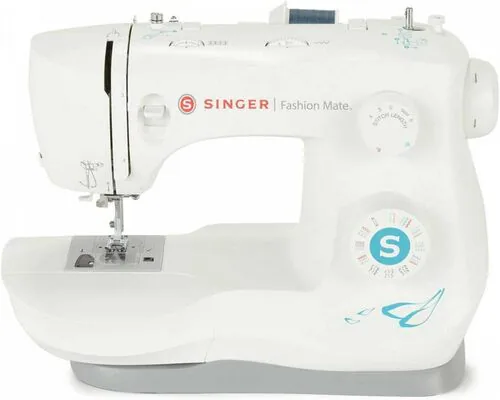
The Fashion Mate 3342 is a mechanical option for someone who wants a visible bobbin and adjustable garment stitches. Its useful distinction is the combination of that loading arrangement with direct controls, rather than a claim that it makes perfect seams for every beginner.
A visible bobbin without a screen interface
Singer’s 3342 page lists 32 stitches, a top drop-in bobbin, one-step buttonhole and needle threader. It specifies Class 15 transparent bobbins. That is a different loading experience from the front-loading M3300, even though both are manual-control choices.
Thread supply in view
Seeing the bobbin is useful when planning a long seam. It does not remove the need to load and route the thread correctly.
Adjustments you can see
The 3342 manual identifies separate length, width and pattern controls. A learner can associate each setting with the sample it produces.
Make buttonholes part of the comparison
The 3342 manual explains a one-step sequence using the buttonhole foot and lever. If your projects involve shirts or dresses, ask to see that process on appropriate fabric before making decorative stitch variety the deciding factor.
Pros & Cons Analysis
Practical implications of the documented design.
Advantages
Separate adjustments offer room to change seam appearance as projects develop. The bobbin view and one-step buttonhole are tangible conveniences that you can evaluate in a demonstration. Their usefulness depends on the operations you actually repeat.
Limitations
The manual specifies pedal-regulated speed; this is not evidence of an electronic speed ceiling or pedal-free sewing. The documented features cannot establish flawless feeding or long-term satisfaction.
Our Verdict
Prioritize visibility and adjustment
Consider the 3342 if you want the bobbin in view, manual settings and a one-step buttonhole. If managing pedal speed is the main concern, compare electronic controls instead. This assessment supports a feature comparison; it does not establish long-term durability.