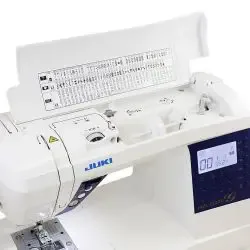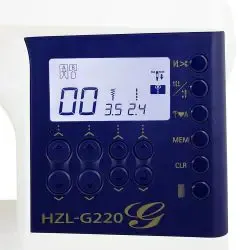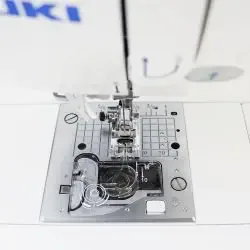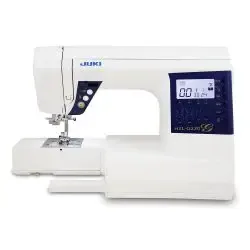
The G220 has useful owner evidence for craft sewing, including dog accessories and layered cotton work. Its automatic trimmer is another reason to consider it. But the previous description overstated its feeding ability and incorrectly implied that you can adjust presser-foot pressure.
What the craft-sewing accounts actually support
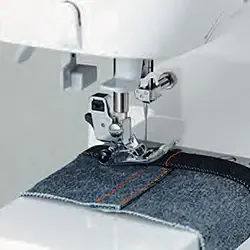
On the exact merchant page, Yeshe Gaines describes daily sewing for a small dog-accessory business and finds the features helpful. Dog mom reports successful cotton-layer sewing and topstitching across seams, alongside projects such as dog coats, bags and curtains. These are relevant uses, not proof that every bulky material will feed successfully.
Veronique Viola appreciates quiet operation. Donna’s newer comment expresses satisfaction without describing a project. The four accounts are positive, but do not establish a representative durability record or a maximum thickness.
Box feed does not mean adjustable pressure
Feeding mechanism
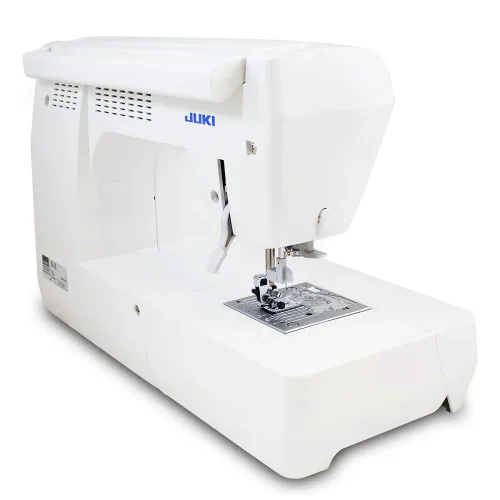
Juki documents box feed and improved presser-foot construction. The owner’s layered-cotton result gives that feature a real use context. It still cannot justify the old promise of perfect stitches through the toughest fabrics.
A setting you cannot change
The same specification table marks presser-foot pressure adjustment as absent. If changing pressure is an important part of your fabric setup, the G220 does not provide that control. Do not confuse the foot’s construction with an adjustable pressure setting.
Compare the repertoire and workspace precisely
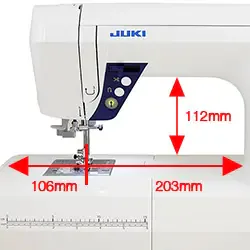
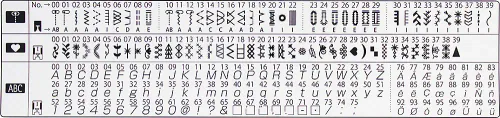
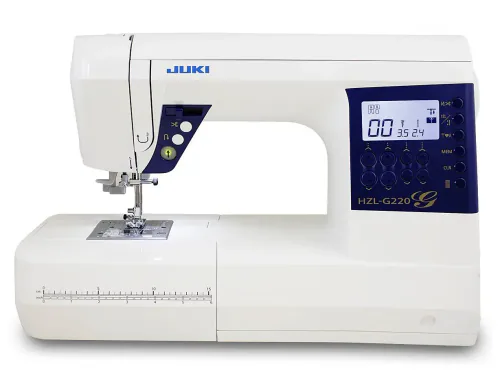
Juki’s current global table lists 80 stitch patterns plus one alphabetic/numeric font. That is clearer than treating the old “180 stitches” total as 180 separate utility and decorative patterns. The listed arm space is 203 mm, and an external wide table is optional. Neither dimension nor a table establishes how comfortably your largest quilt will fit.
Where automatic trimming fits
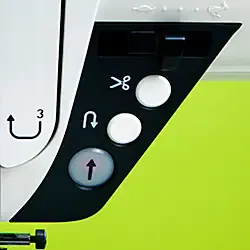
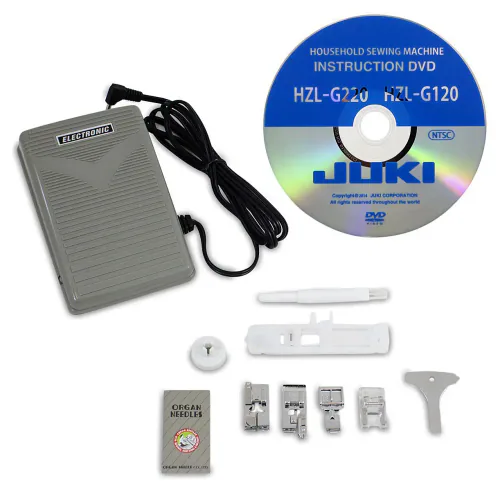
The G220 has automatic thread trimming and quick bobbin preparation. These reduce separate thread-handling actions; they do not replace selecting a suitable stitch or securing a seam. The six listed standard feet cover general sewing, zipper work, overcasting, blind stitching and two buttonhole roles.
Pros & Cons Analysis
Evidence-backed appeal
- Craft workload: the daily-business account and layered-cotton example give a more useful reason to investigate the machine than a generic heavy-duty label. They describe individual workloads, not a commercial endurance test.
- Quietness: one owner values the sound level. That is a preference report, not a measured noise comparison.
- Thread handling: automatic trimming is a documented convenience for repeated seams, although these accounts do not separately evaluate the cutter’s longevity.
Buying limits
Fixed foot pressure is a concrete limitation if you want that adjustment. The positive reports also leave demanding-material capacity and long-term service uncertain. There is no substantive negative account in this four-entry set, so an adverse customer story would be invented.
Our Verdict
Consider the G220 for craft and general sewing when automatic trimming matters and fixed foot pressure suits your setup. Its owner feedback supports investigating layered cotton work, but does not establish industrial capacity. If adjustable pressure is essential, choose a model explicitly offering it rather than expecting that control from the box-feed description.
Product illustrations