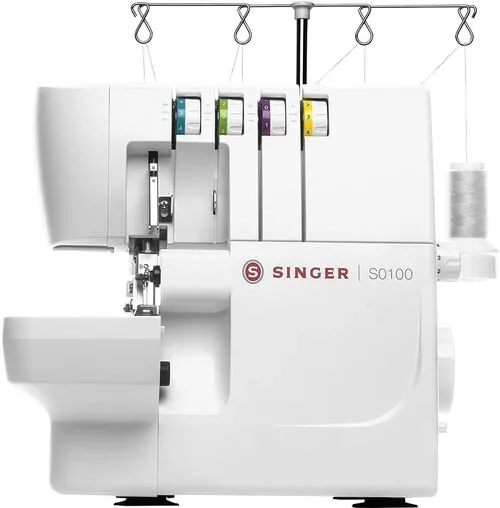
The S0100 combines two-, three- and four-thread serger configurations with a free arm. Compare it on the edges and small tubular pieces you need to finish, and on your willingness to learn its threading routine.
Thread configuration changes the job
Singer’s S0100 specification lists differential feed, color-coded threading, a free arm and a maximum of 1,300 stitches per minute. The machine trims excess allowance while making a seam or edge finish.
Tubular access
The free arm is relevant for positioning small sleeves and cuffs. Check the actual opening of your work; the feature name does not establish that every small item will fit.
Feed adjustment
Differential feed provides an adjustment for the way material moves through the machine. A sample shows more than a promise that all stretch fabrics will lie flat.
Pros & Cons Analysis
Benefits and limits of the documented features.
Advantages
- The two-, three- and four-thread options allow different finishes to be compared within one machine. Choose from the documented configurations for the seam you need.
- A free arm can be a meaningful distinction if small tubular work is frequent, rather than an accessory you rarely use.
Limitations
- Color-coded guides assist navigation but do not eliminate threading order and setup practice. A machine shown prethreaded has not demonstrated the complete routine.
- High maximum speed is not a measured ability to sew slowly or smoothly through every seam intersection.
Our Verdict
A serger choice centered on the workpiece
Consider the S0100 when its thread options and access suit your garment work. If you need a coverstitched hem rather than a trimmed overlock edge, compare a coverstitch machine. Keep an ordinary sewing machine available for operations this serger does not replace.