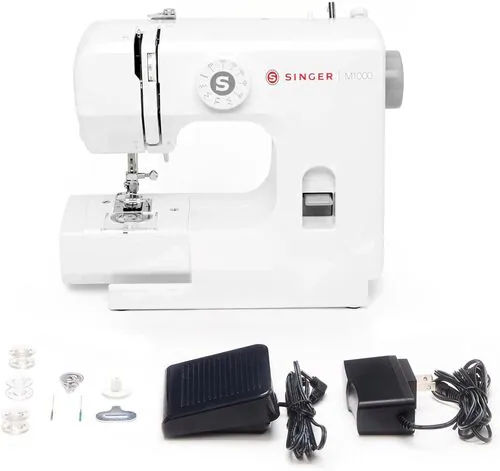
The M1000 is intended for basic mending on light- to medium-weight fabrics. Its small size is a useful advantage only if the repairs you actually need fall within that brief.
Storage convenience comes with a small workspace
Singer lists a 5.5-pound machine, preset stitch settings, a top drop-in bobbin and 4.25 inches between needle and tower. The 32 advertised stitch applications should not be read as 32 separate patterns.
Compact repairs
Measure the work you need to handle as well as the shelf where the machine will live. Storing a machine easily and maneuvering a garment easily are different requirements.
Thicker work
Singer recommends a full-size machine for thicker fabrics and broader applications. Do not choose this model on a general assumption that any portable machine can hem jeans.
Pros & Cons Analysis
Benefits and limits of the documented features.
Advantages
- The documented weight and footprint make it a candidate when moving and storing the machine are important. Include the pedal and other supplies when planning the complete setup.
Limitations
- Preset stitch settings limit the scope for adjustment compared with a machine that offers separate controls. Check the available seam choices before purchase.
- The small needle-to-tower space can matter more than the machine’s outer dimensions when working on a bulky garment.
Our Verdict
A mending option, not a general-purpose upgrade
Consider the M1000 for a narrow repair list and limited storage. If your plans include thicker construction or a wider range of garments, compare a full-size machine first. The compact format is a reason to consider it, not evidence of equal capability in a smaller body.